
An MVP (Minimum Viable Product) is the simplest version of your product that solves one core problem for your target users. It is not a half-baked app — it is a focused, functional product built to validate your idea with real users before you invest in full development.
Startups that skip the MVP stage often spend $100,000+ building features nobody wants. An MVP lets you test, learn, and iterate with a fraction of that budget.
Knowing how to build an MVP on a budget is just as important as knowing what to build. Always define your scope before approaching any agency.
Week 1 – Discovery and Scope Definition
The biggest reason MVPs fail is poor planning. In week one, you define exactly what you are building and — more importantly — what you are not building.
What happens this week:
- Identify your one core user problem
- Define your target user persona
- List all possible features, then cut to the 5 most essential
- Choose your platform — iOS, Android, web app, or cross-platform Flutter
- Set success metrics before writing a single line of code
Output: A signed-off scope document and feature list.
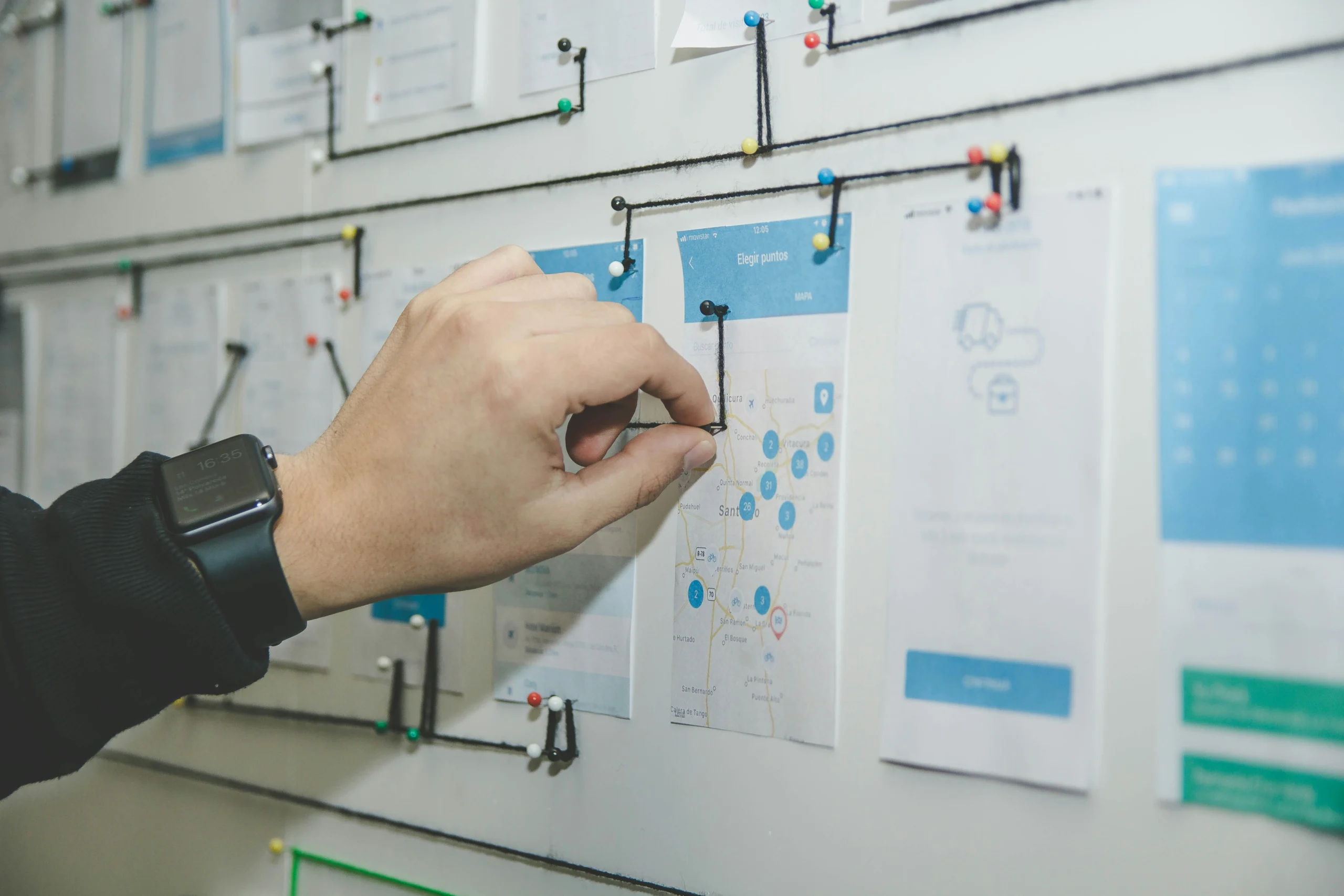
Week 2 – Wireframes and User Flow
Before UI design or development starts, you need wireframes. These are black-and-white screen layouts that show how a user moves through your app from opening it to completing their main action.
- Map out every screen your MVP needs
- Define the complete user journey end to end
- Identify any technical blockers early
- Get stakeholder sign-off on flows
Output: Full wireframe set for all MVP screens.
Week 3- UI/UX Design
With wireframes approved, the design team builds the actual visual interface. This is where your product starts looking real through strategic UI/UX design services.
- Apply your brand colors, typography, and visual style
- Design every screen in high fidelity
- Build a clickable prototype for early feedback
- Finalise design system and component library for developers
Output: Clickable Figma prototype ready for development handoff.
Week 4 and 5 – Core Backend Development
This is where your product gets built. The backend is the engine — databases, APIs, authentication, business logic.
- Set up project infrastructure and tech stack
- Build user authentication (signup, login, password reset)
- Develop core database structure
- Build the primary API endpoints your app needs
- Set up staging environment for testing
Output: Working backend with core API ready for frontend integration.
Week 6 – Frontend and Mobile Development
The frontend connects your design to the backend. For mobile apps, this is where the Flutter or React Native development happens.
- Develop all screens from the approved designs
- Connect frontend to backend APIs
- Implement navigation and user flows
- Handle edge cases and error states
Output: Functional app running on staging environment.
Week 7 – QA Testing and Bug Fixing
Skipping proper QA is how MVPs launch broken. One week of dedicated testing before launch is non-negotiable.
- Functional testing across all screens and flows
- Device and browser compatibility testing
- Performance and load testing
- Security review — especially for authentication and data handling
- Bug fix sprints with daily developer standups
Output: Stable, tested build ready for production deployment.
Week 8 – Launch and Post-Launch Monitoring
Launch week is not just clicking publish. A proper launch includes deployment, monitoring setup, and a plan for the first wave of user feedback.
- Deploy to App Store, Google Play, or live web server
- Set up analytics (Mixpanel, Firebase, or Google Analytics)
- Monitor crash reports and performance in real time
- Collect first user feedback
- Prioritise fixes and features for version 1.1
Output: Live MVP with monitoring active.
What Does an MVP Cost in 2026?
MVP cost depends on complexity, platform, and the team you hire.
- Simple web MVP with 5–8 screens — $5,000 to $15,000
- Mobile app MVP for iOS or Android — $12,000 to $30,000
- Cross-platform Flutter MVP (iOS + Android) — $15,000 to $35,000
- AI-powered MVP with integrations — $25,000 to $60,000+
Working with an agency like TryDigital Solution, most MVPs fall in the $10,000 to $25,000 range depending on feature count.
Common MVP Mistakes to Avoid
Building too many features. If your MVP has more than 6 core features, you are building a full product, not an MVP. Cut ruthlessly.
Skipping user research. An MVP built on assumptions instead of real user interviews is a guess, not a validated product.
Choosing the wrong tech stack. Picking technology that cannot scale forces a full rebuild at version 2. Always build on a stack your agency or team can maintain long-term.
Not setting success metrics. Define what success looks like before you launch — number of signups, retention rate, or a specific user action. Without metrics, you cannot make data-driven decisions.
Why Work With TryDigital Solution for Your MVP?
At TryDigital Solution, we have delivered 50+ MVPs for startups and enterprises across the USA, Canada, Middle East, and Singapore. Our in-house team of Flutter developers, UI/UX designers, and backend engineers handles everything from discovery to App Store launch — no outsourcing, no freelancers.
We use weekly agile sprints so you see real progress every 7 days, not just a final delivery at the end of 8 weeks.
If you have a startup idea and want to see a project scope and cost estimate, book a free discovery call today.
Frequently Asked Questions
Can an MVP really be built in 8 weeks?
Yes, for a focused product with 4 to 6 core features. The key is a locked scope in week one. Any scope changes mid-build will push the timeline.
Should I build iOS, Android, or both for my MVP?
For most startups, start with one platform or go cross-platform with Flutter. Flutter lets you build for iOS and Android simultaneously at lower cost, which makes it ideal for MVPs.
What happens after the MVP launches?
You collect user feedback, analyse behaviour data, and plan version 1.1. The MVP is the starting point, not the final product.
How do I validate my MVP once it is live?
Set a clear success metric before launch. For consumer apps, look at Day 7 retention. For SaaS, track free trial to paid conversion. Talk to your first 20 users personally — their qualitative feedback is more valuable than any metric at this stage.
Knowing how to build an MVP on a budget is just as important as knowing what to build. Always define your scope before approaching any mobile app development agency.
Ready to build your MVP? Contact TryDigital Solution for a free project discovery call. We will scope your idea, estimate the cost, and tell you honestly if 8 weeks is realistic for what you want to build.